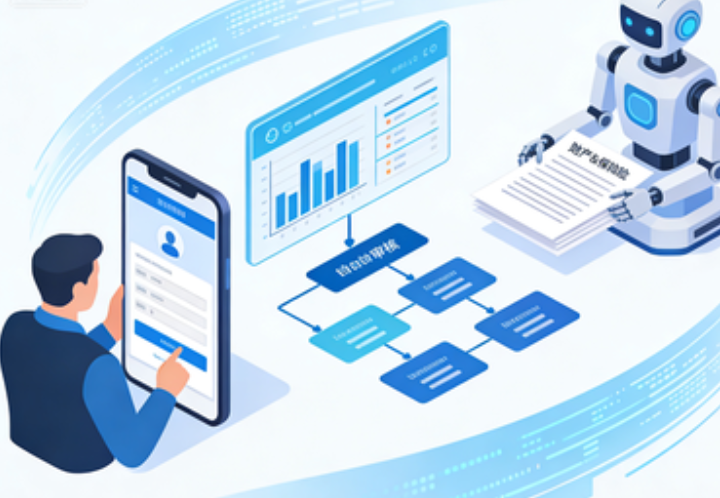
Property and casualty (P&C) insurers face immense pressure to settle claims quickly, accurately, and fairly. Traditional manual claims processing – paper forms, phone calls, spreadsheets – leads to delays, high administrative costs, and frustrated policyholders. Claims processing automation for property and casualty insurers leverages technologies like robotic process automation (RPA), optical character recognition (OCR), and AI‑driven decision engines to digitize the entire claims lifecycle from first notice of loss (FNOL) to final payment.
The Cost of Manual Claims Processing
Industry studies show that manual claims handling consumes 60-70% of a P&C insurer’s operating budget. Adjusters spend hours on data entry, document sorting, and repetitive follow‑ups. The average auto claim takes 12–15 days to close; a complex property claim can drag on for months. Delays breed litigation, bad faith allegations, and customer churn.
How Automation Works End‑to‑End
-
FNOL intake – Policyholders submit claims via mobile app, web portal, or voice assistant. OCR extracts data from photos of driver’s licenses, police reports, or damage images.
-
Policy validation – RPA bots check coverage, deductibles, and limits against the policy administration system.
-
Triaging & assignment – AI scores claim severity and automatically routes to the appropriate adjuster or straight‑through processing (STP) path.
-
Damage assessment – Computer vision estimates repair costs from uploaded photos (e.g., a dented bumper).
-
Fraud detection – Rules‑based and machine learning models flag suspicious patterns (e.g., same address, recent policy change).
-
Reserving & approval – Automated workflows calculate reserve amounts and push for manager approval only above a threshold.
-
Payment processing – Integration with payment gateways releases settlement funds via ACH or virtual card.
-
Communication – Automated emails/SMS keep the policyholder informed at each stage.
Key Benefits for P&C Insurers
-
Reduced cycle time – From days to hours for simple claims (e.g., windshield repair).
-
Lower loss adjustment expense (LAE) – Up to 40% reduction in administrative costs.
-
Improved customer satisfaction – Real‑time updates and faster payments increase Net Promoter Score (NPS).
-
Better fraud detection – Automation enforces consistency, making anomalies easier to spot.
-
Regulatory compliance – Audit trails show exactly how each claim was processed.
-
Scalability – Handle volume spikes (e.g., hailstorms, hurricanes) without hiring temporary staff.
Technologies Powering Claims Automation
Robotic Process Automation (RPA) – Mimics human keystrokes to move data between legacy systems.
Optical Character Recognition (OCR) – Converts scanned documents into machine‑readable text.
Natural Language Processing (NLP) – Reads adjuster notes and police reports to extract key facts.
Rules Engines – Automate decisions like “if repair estimate < $500 and no prior claims, auto‑approve”.
Workflow Orchestration – Manages handoffs between bots, AI models, and human adjusters.
Real‑World Use Cases
-
Auto physical damage – Policyholder takes photos; AI provides instant estimate and schedules repair shop.
-
Homeowners (water damage) – Automation checks for previous water claims, validates plumber invoices, and releases initial mitigation payment.
-
Liability (slip & fall) – OCR extracts medical bills and compares to fee schedules; automated reserve setting.
-
Workers’ compensation (often written by P&C carriers) – Automated first‑payment of lost wages.
Implementation Roadmap
Phase 1: Assessment – Map current claims process, identify high‑volume/low‑complexity claim types.
Phase 2: Pilot – Automate one claim type (e.g., glass claims) using RPA + OCR.
Phase 3: Integration – Connect automation platform with core policy admin, document management, and payment systems.
Phase 4: AI augmentation – Introduce fraud models and image recognition.
Phase 5: Straight‑through processing – Achieve fully automated claims for 30-50% of low‑severity claims.
Overcoming Common Challenges
-
Legacy systems – Use RPA as a “light touch” integration layer without replacing core systems.
-
Change management – Retrain adjusters to handle exceptions and complex claims, not data entry.
-
Data quality – Standardize FNOL data capture forms before automation.
-
Regulatory variance – Configure rules to comply with state‑specific requirements (e.g., appraisal clauses).
Measuring Success
Key performance indicators (KPIs) to track:
-
Average claim handling time (FNOL to payment)
-
Claims processing cost per claim
-
Straight‑through processing rate
-
First‑call resolution rate for FNOL
-
Customer satisfaction score (post‑settlement)
Future Trends
Generative AI will soon write adjuster narratives, summarize medical records, and even draft settlement offers. Meanwhile, IoT data (telematics, smart home sensors) will trigger automated first‑notice‑of‑loss without policyholder action – for example, a water leak sensor automatically opens a claim and dispatches a plumber.
Conclusion
Claims processing automation for property and casualty insurers is no longer a futuristic concept – it is a competitive necessity. Early adopters have reduced costs, accelerated settlements, and improved policyholder loyalty. Start by automating one claim type, prove ROI, then expand across the enterprise.