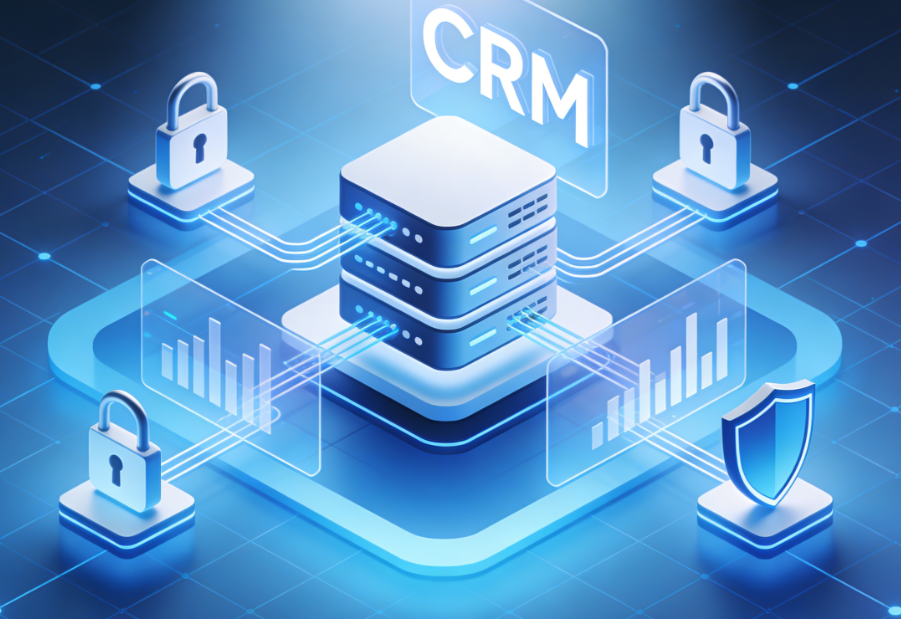
Financial services – banking, wealth management, insurance, and fintech – operate on trust. Clients entrust their most sensitive information: social security numbers, investment portfolios, loan applications, and transaction histories. A customer relationship management (CRM) system sits at the heart of client interactions, making it a prime target for cyber threats. A SOC 2 certified CRM for financial services provides the assurance that your CRM vendor has implemented rigorous controls over security, availability, processing integrity, confidentiality, and privacy.
Understanding SOC 2 in the Financial Context
SOC 2 (Service Organization Control 2) is an auditing standard developed by the AICPA. It evaluates a service provider’s controls based on five trust service criteria. For financial services, the security and confidentiality principles are most critical. A SOC 2 Type II report goes further – it tests controls over a period of time (typically 6-12 months), not just a snapshot. Financial institutions increasingly mandate SOC 2 Type II as a prerequisite for CRM procurement.
Risks of Using a Non‑Certified CRM in Financial Services
Data breaches – Customer PII and financial account numbers exposed via weak CRM access controls.
Regulatory fines – Violations of GLBA, SEC Rule 17a-4, FINRA, or GDPR.
Loss of client trust – A single incident can drive high‑net‑worth clients to competitors.
Third‑party risk – Your CRM vendor becomes an extension of your compliance boundary.
Key Features of a SOC 2 Certified CRM for Financial Services
Granular role‑based access – Advisors see only their own clients; compliance officers have read‑only audit access.
Encrypted data at rest and in transit – AES‑256 for storage, TLS 1.3 for transmission.
Automated audit trails – Every client record view, edit, or export is logged with timestamp and user ID.
Change management controls – No unauthorized code updates; all changes follow documented approval.
Incident response plan – Vendor commits to notification within 72 hours of a security event.
Regular penetration testing – External firms test the CRM environment annually.
Logical access segregation – Multi‑tenant systems must prevent cross‑customer data leakage.
How SOC 2 Certification Benefits Your Financial Firm
Simplifies vendor risk assessments – A SOC 2 report replaces lengthy questionnaires.
Demonstrates due diligence – Regulators look favorably on documented vendor oversight.
Enables client retention – Wealthy clients ask “Is my data safe?”; you can answer with confidence.
Supports business development – Many institutional investors require SOC 2 from all service providers.
Reduces internal audit effort – Your internal audit team can rely on the SOC 2 report for control testing.
Use Cases Across Financial Services
Wealth Management – Track client financial plans, risk profiles, and documents (trusts, wills) securely.
Commercial Banking – Manage loan pipelines with confidentiality – borrower financials never exposed to unrelated relationship managers.
Insurance – Policy renewals and claims handling with processing integrity (ensuring data isn’t altered incorrectly).
Fintech (Robo‑advisors) – Scale customer onboarding while maintaining security and privacy.
Evaluating SOC 2 Reports: What to Look For
Not all SOC 2 reports are equal. Request the Type II report and examine:
Trust criteria scope – Does it cover security + confidentiality + privacy?
Exception notes – Any control failures during the audit period?
Complementary user entity controls (CUECs) – What actions must your firm take to maintain compliance?
Reviewer credentials – Was the audit performed by a reputable CPA firm (e.g., Big 4)?
Implementation Steps
Map your data flows – Understand what customer data enters the CRM.
Define access policies – Least privilege principle.
Enable 2FA and SSO – Integrate with your identity provider (Okta, Azure AD).
Configure audit logging – Ensure logs are sent to your SIEM.
Train relationship managers – Emphasize that the CRM is a trusted system, not a personal notebook.
Future Outlook
The financial services industry is moving toward “continuous compliance” – automated monitoring that proves SOC 2 controls are always working, not just during an audit. CRM vendors will increasingly offer real‑time compliance dashboards and API‑based evidence collection. Additionally, the rise of embedded finance means CRMs will need to handle new data types (BNPL histories, crypto wallets) under the same SOC 2 umbrella.
Conclusion
A SOC 2 certified CRM for financial services is more than a marketing badge – it is a foundation of operational integrity. As cyber threats grow and regulators tighten rules, choosing a certified CRM reduces risk and builds client confidence. Make SOC 2 Type II a mandatory filter in your next CRM selection.