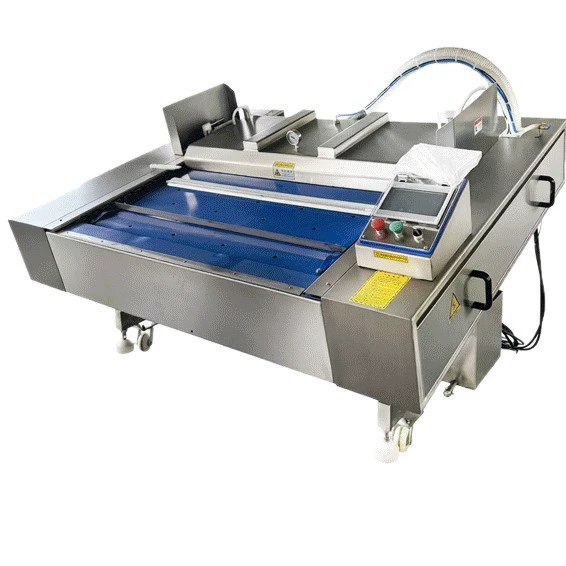
Somewhere in your plant there is a machine that was cleaned enthusiastically for two years and then started throwing sensor faults, then drive faults, then an electrical fault that nobody could trace. The machine did not wear out. It was washed to death.
Cleaning is not optional in food and pharmaceutical production, so the answer is not to clean less. The answer is to clean in a way that removes product without pushing water, chemicals, and compressed air into places that were never designed for them.
IP65 does not mean what most people think
IP65 means dust-tight and protected against water jets. It does not mean submersible, it does not mean hose-proof from every angle at any pressure, and it certainly does not mean the seals are still intact after three years of daily caustic.
Before you pick up a hose, check three things: the IP rating on the machine plate, the condition of every door gasket, and whether the cable glands are the correct size for the cables passing through them. A missing gland or a perished gasket turns an IP65 machine into an open box.
What water actually does inside a machine
- Capillary creep. Water travels along cable bundles, inside conduit, and through connectors by capillary action, and it arrives in the cabinet days later
- Condensation. Cold water on a warm cabinet, or a warm wash on a cold machine, produces condensation inside the enclosure, which is worse than a direct spray
- Bearing washout. Water displaces grease. A bearing that looks fine starts screaming three weeks later
- Sensor death. Photoelectric sensors and inductive proximity switches fail at the connector, not the lens
- Product residue in hidden places. Water pushes powder into crevices where it sets like cement and becomes a hygiene risk
Materials and chemicals
Not every stainless is the same, and not every chemical is compatible with every plastic:
- Chlorinated sanitisers attack 304 stainless and cause pitting, especially in warm concentrations left to dry. Use 316 where chlorine is part of the daily routine, and rinse afterwards
- Caustic solutions attack aluminium, including anodised guards and some conveyor frames
- Solvent cleaners cloud polycarbonate guards and craze acrylic. Once crazed, they crack
- Acidic cleaners are fine on 316, risky on 304, and bad for zinc-plated parts
- Foaming cleaners leave residue in the film path if not rinsed, and residue causes seal failures
Write the approved chemical list on a card and tape it inside the cleaning cupboard. This one step prevents most chemical damage.
Dry clean first, always
Most product residue can be removed with a brush and a vacuum before any liquid arrives. Brushing first means less water, less chemical, and less sludge pushed into places you cannot reach. It is also faster.
Use a soft brush, a vacuum with a HEPA filter, and a scraper made of plastic, never metal. A stainless scraper on a stainless surface leaves scratches that hold product forever.
Compressed air is a trap
Blowing product off a machine feels efficient and is often the worst thing you can do. Air drives dust into bearings, into the cabinet through any imperfect seal, and into the film path where it causes seal failures for the next three hours.
If you must use air, use low pressure with a proper nozzle, and never aim at a bearing, a sensor, or a cabinet door.
A zone-by-zone method
Product contact zone (forming tube, jaws, chute, hopper): clean every shift, dry where possible, and inspect for residue before the next run. This is the zone your auditor cares about.
Film path (rollers, dancer, pull belts): dry cloth only, every shift. Any moisture here becomes a registration fault.
Weighing system: brush and vacuum, never water. Load cells dislike moisture and hate direct spray.
Conveyors: belts come off for cleaning on a schedule; frames get wiped, not hosed. Check belt undersides, which is where product hides.
Cabinet exterior: damp cloth, then dry. Never open a cabinet for cleaning unless the power is off and you have a reason.
Floor and frame: this is where a hose belongs, and even here, do not aim at the machine base.
Reassembly and restart checks
After a deep clean, before you run production: check that every guard is back, every gasket is seated, every connector is dry and clicked home, and the film path is completely dry. Run ten empty cycles and inspect the packs. A machine that was cleaned on Friday and throws faults on Monday was usually restarted wet.
Documentation for audits
Keep a cleaning log per machine, per shift, with the chemical used and its concentration. Auditors ask for it, and so will your own quality team when a customer complaint arrives. Photograph the machine after cleaning once a month, not to prove anything to anyone, but because the photos show you when a seal started to perish.
If your machine runs in a washdown area, check the IP rating before you buy rather than after. Our guide to food-grade packaging machine requirements covers what to specify.
Frequently asked questions
Can I hose down an IP65 packaging machine?
With low-pressure jets, from a reasonable distance, with all doors closed and gaskets intact. Not with a high-pressure lance, not into connectors, and not into the cabinet.
What should I use on the sealing jaws?
A dry cloth, and a plastic scraper for stubborn residue. Never a wire brush, which scores the jaw surface and destroys seal evenness.
How do I clean a weighing hopper?
Remove it if the design allows, wash it separately, dry it fully, and refit. Washing it in place sends water into the load cell and the frame.
Is a food-grade cleaner enough?
Food-grade refers to the residue left behind, not to material compatibility. Check both: that it is approved for food contact surfaces, and that it will not attack your stainless grade or your guards.
Related reading: food-grade machine requirements and the maintenance schedule.