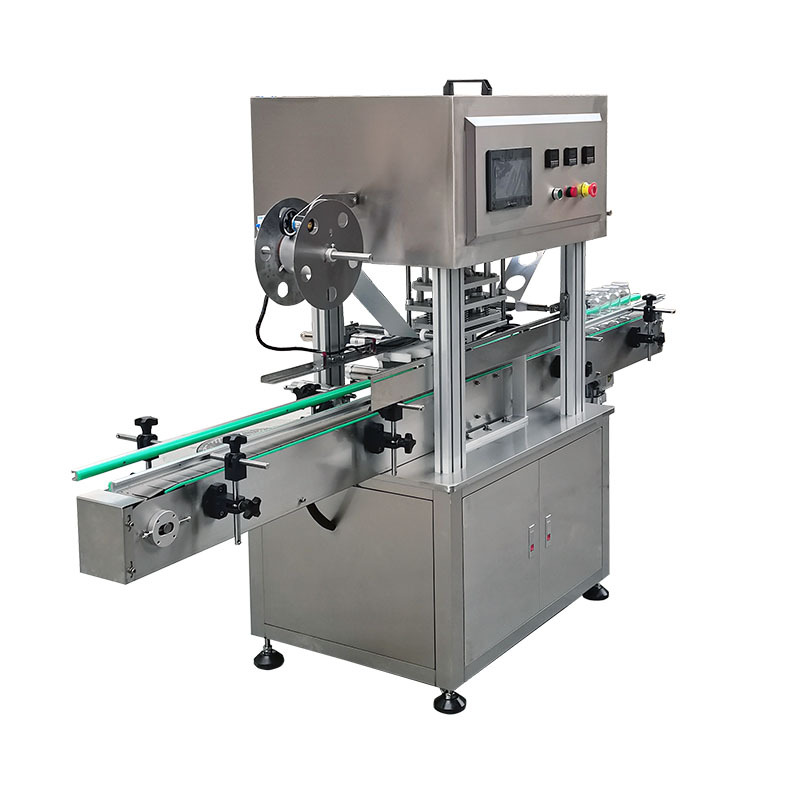
A packaging machine does not usually fail suddenly. It fails slowly, in a way that costs you twenty minutes a week for four months, and then one Tuesday morning it stops in the middle of a rush order and the line is down for two days.
The frustrating part is that almost every one of those failures announces itself first. The seal gets a little weaker. The bag length drifts two millimetres. The knife starts leaving a thread. Nobody writes it down, because nobody has a schedule that says who should look.
Here is the schedule we recommend to customers, sized for a single machine and one trained operator. It takes about twenty minutes a shift and a few hours a year.
Every shift, five minutes
- Wipe the sealing jaws with a dry cloth while they are cold. Product dust on a jaw becomes a weak seal, and a weak seal becomes a customer complaint.
- Look at the PTFE tape on both jaws. Shiny is fine. Brown, bubbled, or torn at the edges means replace it before it costs you a shift.
- Check air pressure at the gauge, and drain the water trap on the filter regulator. Do it even when it looks empty. Especially when it looks empty.
- Run a hand along the film path and feel for film shavings or adhesive build-up on the rollers.
- Wipe the photoelectric sensor lenses with a dry, lint-free cloth. A dirty eye sensor produces phantom registration errors that send people hunting for the wrong problem.
- Press the emergency stop and confirm the machine actually stops. Then reset it and confirm it restarts.
- Listen for one full minute without doing anything else. New noises are cheap to fix in week one.
Weekly, twenty minutes
- Clean the dust off the cabinet fan filters and the heat exchanger intake. Blocked filters are the most common cause of a drive overheating on a Friday afternoon.
- Check belt tension on the infeed and outfeed conveyors. Loose belts slip, slip causes jams, jams cause knife damage.
- Inspect the cutting knife under a light for nicks. A nicked knife produces bags with a torn top edge that nobody notices until a retailer rejects a pallet.
- Check the vacuum pump oil level if you run a vacuum packer or a pneumatic pickup system. Low oil is quiet until it is not.
- Retighten anything that vibrates: guard panels, sensor brackets, eye-mark sensor mounts.
- Pull five finished packs at random and do a peel test by hand. Note it on the sheet. Trends matter more than single results.
Monthly, one hour
- Grease the points listed in the manual with the grease the manual specifies. Not a substitute, not a heavier grade, not “whatever is in the workshop”.
- Inspect the chain and sprockets for slack and dry links, and lubricate with the recommended chain lubricant.
- Look along every cable run for chafing where cables pass through panels or near moving parts.
- Verify sealing temperature with an external probe against the setpoint. A drifting thermocouple gives you seals that look fine and fail in transit.
- Clean the compressed air filter element or replace it if the bowl shows oil or water carryover.
- Inspect the film dancer and tension rollers for free movement. Sticky dancers cause registration drift at high speed only, which is the hardest kind to diagnose.
- Photograph the machine from four angles. Six months from now those photos will show you what changed.
Quarterly, half a day
- Replace PTFE tape and jaw covers as a scheduled item, not when they fail. Tape is cheap. A production day is not.
- Change vacuum pump oil and the inlet filter.
- Calibrate the load cell with certified test weights. Record the readings before and after.
- Check servo and gearbox backlash by hand where accessible, and note any increase against last quarter.
- Test every safety interlock individually, including the ones nobody ever opens.
- Torque-check the jaw assembly and the main drive mounts.
- Review the spare parts drawer and reorder anything down to its last unit.
Annually, one full day, ideally with a technician
- Replace all filters, including the cabinet filter mats and the air dryer element.
- Change gearbox oil.
- Replace PLC and HMI backup batteries before they die, because a dead battery can erase parameters that took a week to tune.
- Insulation-test the motors and inspect the main contactors for pitting.
- Open every cabinet, vacuum out the interior, and re-torque the terminal screws. Loose terminals arc, and arcing smells like burnt plastic and looks like a mystery.
- Run a full seal integrity test at production speed with your current film lot, not a sample from last year.
- Review the maintenance sheet with the operators. They know which faults repeat, and nobody has asked them.
The drawer that saves a weekend
Keep these on site, in a labelled drawer, not in a purchase requisition:
- Two rolls of PTFE tape, correct width
- One spare knife and one spare jaw heater cartridge
- Two thermocouples
- A set of fuses and one spare 24 V power supply
- One spare photoelectric sensor and one solenoid valve
- One conveyor belt of each size on the line
- Vacuum pump oil, one change worth
- Silicone sealant, cable ties, ferrules, and a good crimping tool
The whole drawer usually costs between 500 and 1,500 dollars depending on machine size. One avoided day of downtime normally pays for it, and the drawer is also the difference between a two-hour fix and a two-week wait for a part to clear customs.
Five failures that whisper before they shout
- Seals that leak in transit but pass on the line. Usually worn PTFE, low jaw pressure, or a thermocouple reading two degrees high.
- Bag length drifting. Film tension, a sticky dancer roller, or an encoder coupling beginning to slip.
- Film jamming at startup only. Film path alignment, or the operator threading it slightly differently each morning.
- Fill weight creeping up. Product build-up on the weigh cell, or a worn feed gate.
- Drive overcurrent during acceleration. A bearing starting to seize, or belt tension set too tight after someone “fixed” a slip.
Make the record survive staff turnover
Laminate one page, tape it to the machine, and have the operator initial it every shift. Not a digital system, not a shared drive, one sheet on the machine that you can read from a metre away. When the person who knew everything about that machine leaves, the sheet is the only memory left in the building.
And pick two people to own it, not one. The second person is the one who saves you when the first person is on holiday. If a machine has already started failing, our guide to diagnosing sealing jaw problems is the next place to look.
Frequently asked questions
How often should PTFE tape be replaced?
Every one to three months on a single-shift operation, faster on three shifts or with abrasive film. Replace it when it discolours, bubbles, or shows a visible seam impression.
Do we need a service contract?
For a single machine, a yearly visit plus remote support is usually enough. For a multi-machine line where one stoppage idles everything, a contract with a response time written into it is worth the money.
Can operators do this maintenance?
The daily and weekly items, yes, with training and a checklist. Leave greasing schedules, electrical checks, and calibration to a technician, and write down who is allowed to do what.
What causes the most unplanned downtime?
In our experience, seal failures, film jams, and air supply problems, in that order. All three are almost entirely preventable with the schedule above.
Related reading: diagnosing sealing jaw failures and nine causes of film jams.