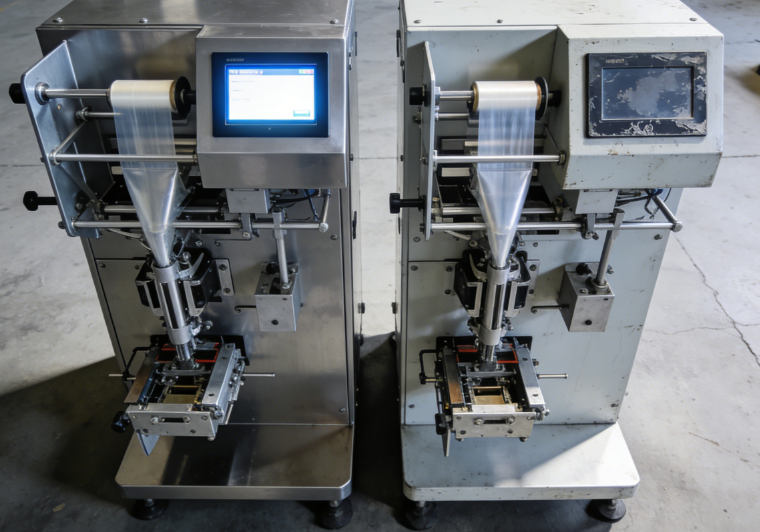
When capital is tight, a used automatic packaging machine looks tempting – often 40–70% cheaper than new. But used equipment comes with risks: outdated controls, missing documentation, and unknown wear. This guide helps you evaluate the trade-offs and decide which route fits your business.
Advantages of Buying New
- Full warranty (typically 12–24 months) – parts and labor included.
- Latest technology – energy-efficient motors, touchscreen HMI, Industry 4.0 connectivity.
- Compliance documentation – CE, UL, GMP, or FDA certificates included.
- Lower film waste – new machines have advanced tension control and registration.
- Supplier training and support – operators learn correct procedures from day one.
- Higher resale value – well-maintained new machines retain 40–50% value after 5 years.
Disadvantages of New
- Higher upfront investment (can be $20k–$200k+).
- Lead time (often 8–16 weeks for manufacturing).
- Depreciation – value drops 20–30% in first year.
Advantages of Used/Refurbished
- Lower purchase price (often 30–60% of new).
- Immediate availability (many used machines in stock).
- Depreciation already absorbed by previous owner.
- Good for startups, pilot lines, or backup machines.
Risks of Used Machines (and How to Mitigate)
- Hidden wear: Seal jaws, bearings, and motors may be near end of life. Mitigation: Hire an independent technician to inspect and run the machine before buying.
- Obsolete controls: Old PLCs may have no spare parts or software support. Mitigation: Only buy machines with major brands (Siemens, Allen-Bradley) less than 8 years old.
- No documentation: Missing manuals, electrical schematics, or validation documents. Mitigation: Request documentation as a condition of sale; walk away if missing.
- Unknown usage history: The previous owner might have run it 24/7 for 10 years. Mitigation: Ask for maintenance logs and cycle counter (many PLCs record total operating hours).
Where to Buy Used Machines Safely
Reputable sources: specialized used packaging equipment dealers (e.g., Loebbert, Frain Industries), auctions from closing plants (but no warranty), or refurbished machines from the original OEM (best but more expensive). Avoid private sellers on generic classifieds – too many scams.
Refurbished vs As-Is – Big Difference
As-is means you buy the machine in its current state – no guarantee it runs. Refurbished means the seller has replaced wear parts, tested operation, and usually offers a 30–90 day warranty. Refurbished costs about 20–30% more than as-is but is far safer. For a production-critical line, always choose refurbished with a warranty.
Financial Comparison Example (5-year TCO)
New machine: $80,000 purchase, $4,000/year maintenance, 3% film waste. Used (as-is): $30,000 purchase + $12,000 immediate repairs + $7,000/year maintenance (higher due to age) + 5% film waste. Over 5 years: New total = $80k + $20k + waste ($15k) = $115k. Used total = $30k + $12k + $35k + waste ($25k) = $102k. Used is slightly cheaper but with more downtime risk. If downtime costs are high, new wins.
Decision Matrix – Which is Right for You?
- Choose new if: You need high uptime (99%+), have strict compliance requirements, plan to keep the machine 10+ years, or have the budget.
- Choose used/refurbished if: You are on a tight budget, have in-house maintenance skills, run short-term projects, or need a backup machine.
If you decide to buy used, always perform a site inspection, run a test with your product, and get a written agreement that the machine is free of safety defects. And remember: the most expensive machine is the one that doesn’t run.