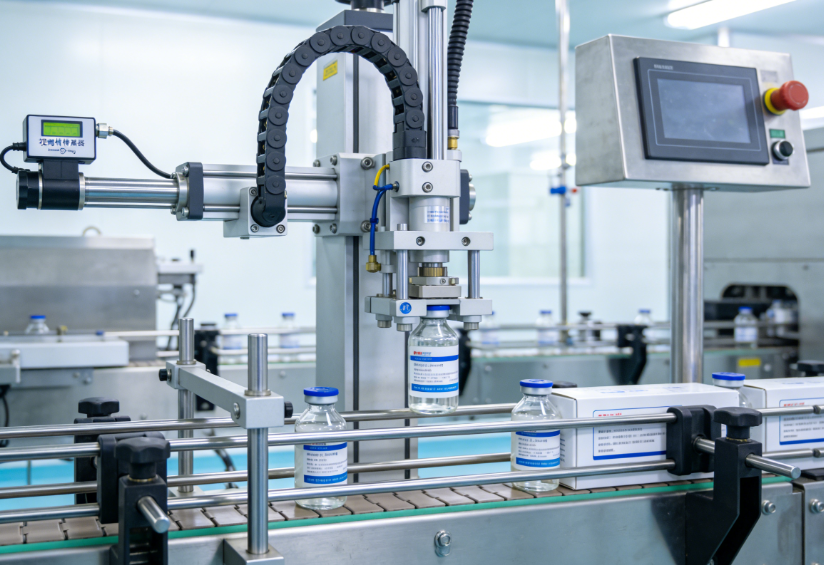
Automatic packaging machines in the pharmaceutical industry operate under the strictest regulations. A machine that is perfectly fine for snacks can be illegal for drugs. This buying guide focuses on GMP (Good Manufacturing Practices), validation requirements, and precision dosing for solid and liquid pharmaceuticals.
Critical Regulatory Frameworks
Depending on your target markets, you must comply with: FDA 21 CFR Part 211 (current GMP for finished pharmaceuticals), EU GMP (EudraLex Volume 4), and 21 CFR Part 11 (electronic records and signatures). Your machine supplier must provide validation documentation including IQ (Installation Qualification), OQ (Operational Qualification), and PQ (Performance Qualification).
1. Dosing Accuracy and Consistency
For tablets/capsules: counting accuracy should be 99.95% or better (max 5 miscounts per 10,000). For powder fills: ±1% of target weight or better. The machine must have in-line checkweighers with automatic rejection of out-of-spec packs. All weigh cells should be calibrated traceable to national standards.
2. Materials and Cleanability
Contact parts must be 316L stainless steel (low carbon for corrosion resistance) with electropolished surface finish Ra < 0.4µm. No crevices, dead legs, or threaded connections in product zone. Gaskets must be FDA-approved silicone or PTFE. The machine should support CIP and SIP (steam-in-place) cycles.
3. 21 CFR Part 11 Compliance
If you sell in the US, the machine’s software must include: audit trails (records all parameter changes, who made them, and when), electronic signatures (username + password + reason for change), data integrity controls (no deletion or overwriting), and time-stamped backups. Ask for a Part 11 compliance certificate from the supplier.
4. Changeover and Segregation
Pharma production often runs multiple products (different strengths, formulations) on the same line. The machine must allow complete changeover with no cross-contamination. Features include: dedicated change parts for each product, vacuum cleaning ports, and verification checklists on HMI. Changeover time under 60 minutes is considered good.
5. Environmental Monitoring Integration
For sterile or potent drugs, the packaging machine should have integrated particle counters, pressure differential sensors, and HEPA-filtered air over the product zone. The machine’s control system should log environmental data and alert if limits are exceeded.
Validation Requirements You Must Budget For
- IQ (Installation Qualification): Verify machine installed correctly, utilities meet specs. Cost typically $2k–$5k.
- OQ (Operational Qualification): Run machine without product to test limits, alarms, safety. Cost $5k–$10k.
- PQ (Performance Qualification): Run actual product over 3 batches to prove consistency. Cost $10k–$20k + product.
- Ongoing requalification: Annually or after major changes.
Always confirm that the supplier includes basic validation documentation in the price – many charge extra.
Questions to Ask Pharma Packaging Machine Suppliers
Do you have experience with FDA or MHRA audits?
Provide a list of installed machines in regulated pharma companies.
Is the PLC software validated for 21 CFR Part 11?
What is the accuracy standard deviation at 95% confidence?
Can you supply a turnkey validation package (IQ/OQ/PQ templates)?
Case Study: Blister Line Upgrade
A generic drug manufacturer purchased a low-cost tablet filler without proper validation. During an FDA inspection, the auditor found missing audit trails and non-calibrated checkweighers. The company received a Form 483 warning letter, leading to production shutdown and $1M in remediation costs. They later bought a validated machine from a GMP-focused supplier.
Pharmaceutical packaging is not an area to cut corners. Invest in a machine that is designed, documented, and validated for regulated environments from day one.