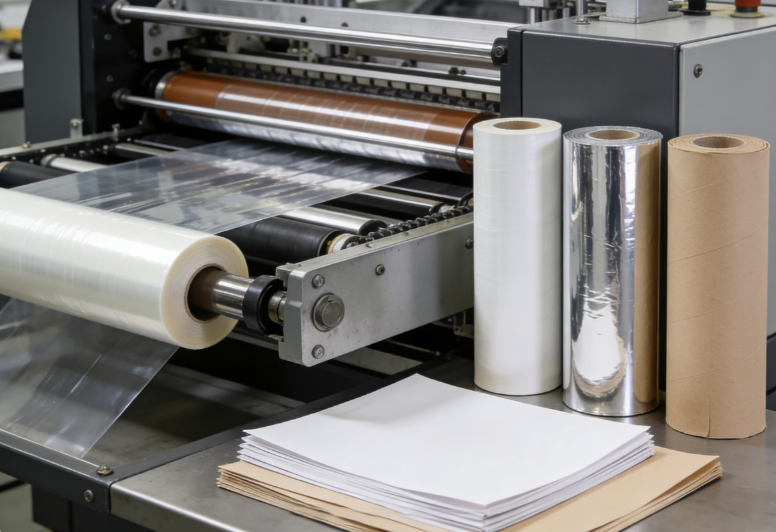
You’ve chosen an automatic packaging machine, but will it seal your laminated film? Can it handle compostable materials? Material compatibility is one of the most overlooked aspects of machine selection. This guide explains film types, sealing technologies, and how to test compatibility before purchase.
Common Packaging Film Types
- Polyethylene (PE): Low cost, good flexibility, but requires longer sealing time. Best for pillow bags and heavy-duty shipping.
- Polypropylene (PP): Clear, stiff, excellent moisture barrier. Used for snacks and baked goods. Needs precise temperature control.
- Polyester (PET): High strength, good printability. Often laminated with PE for heat sealability.
- Aluminum foil laminates: Ultimate barrier against light, oxygen, and moisture. Used for coffee, pharmaceuticals. Requires robust seal jaws.
- Biodegradable films (PLA, cellulose): Eco-friendly but seal at narrower temperature windows (often 20°C range vs 50°C for PE).
Sealing Technology Match
Heat sealing works with most thermoplastic films. Key parameters: sealing temperature, pressure, and dwell time. A machine with PID temperature control and servo-driven sealing pressure is best for multi-material runs.
Ultrasonic sealing vibrates films together, ideal for contaminated surfaces (powder or oil on seal area). Works with many films but not with very thick aluminum foil.
Impulse sealing uses brief high heat followed by cooling. Good for thin films but slow for high-speed lines.
Critical Material Specifications to Check
- Film thickness: 30–120 microns typical. Thicker films require stronger seal jaws and longer dwell time. Ensure the machine’s jaw pressure is adjustable up to the required level.
- Coefficient of friction (COF): Affects how film slides over forming tube. Very low COF (slippery) causes film buckling; high COF causes drag and mis-registration. Ask the machine supplier for recommended COF range.
- Heat seal initiation temperature: Some films seal at 110°C, others at 180°C. The machine must reach and maintain the required temperature with fast recovery.
Testing Material Compatibility – Step by Step
- Send your actual film roll (50 meters minimum) to the machine supplier.
- Ask for a video or live test producing 200 bags.
- Check seal strength: manually pull the seal – it should tear the film, not the seal.
- Check for burn-through or wrinkles: sign of mismatched temperature or pressure.
- Run a dye penetration test for liquid-tightness if needed.
Common Compatibility Problems and Solutions
- Problem: Seal looks good but leaks after 1 hour. Solution: Increase dwell time or use cooling jaws.
- Problem: Film sticks to seal jaws. Solution: Apply non-stick coating (Teflon) or use a release film.
- Problem: Inconsistent seal strength across bag width. Solution: Check jaw parallelism and temperature uniformity.
Future Trends: Recyclable Monomaterial Films
Many brands are switching from multi-layer laminates to monomaterial PE or PP that can be recycled. These films are more challenging to seal because they have no built-in sealant layer. Ensure your automatic packaging machine has adjustable seal parameters wide enough to handle these next-generation films.
Remember: a machine that works perfectly with one film may fail with another. Always validate material compatibility with your specific film structure before signing the purchase order.